

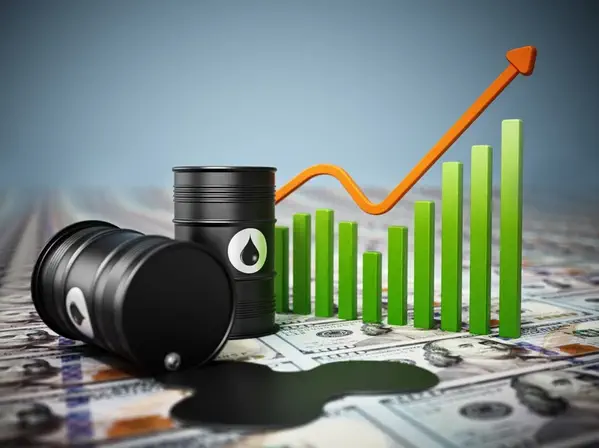
Global oil prices climbed to $73 per barrel from about $70 following fresh strikes by the United States on Iran, escalating tensions in the Middle East and raising concerns about potential disruption to crude oil flows.
The surge reflects heightened geopolitical risks in a region that accounts for a significant share of global oil supply.
Specifically, the price of Nigeria’s Bonny Light crude rose to $72.90 per barrel from $70.80 per barrel. Similarly, Brent crude rose to $72.87 per barrel from $71.10, while Murban crude rose to $74.24 per barrel from $71.50.
Market analysts said the spike was driven largely by fears that the conflict could impact shipping routes and production facilities in the Gulf region, thereby tightening global supply.
Meanwhile, members of OPEC+ have reaffirmed their commitment to maintaining market stability, even as they agreed to gradually return 1.65 million barrels per day (bpd) of voluntary production cuts to the market.
In a statement issued after a virtual meeting held on March 1, 2026, eight member countries — Saudi Arabia, Russia, Iraq, United Arab Emirates, Kuwait, Kazakhstan, Algeria, and Oman — reviewed global market conditions and outlook.
The eight countries, which previously announced additional voluntary production adjustments in April and November 2023, said that, in view of a steady global economic outlook and healthy market fundamentals — reflected in relatively low oil inventories — they would resume unwinding the 1.65 million bpd cuts announced in April 2023.
They agreed to increase production by 206,000 bpd, to be implemented in April 2026. The group noted that the full 1.65 million bpd could be returned, either in part or in full, depending on evolving market conditions, in a gradual manner.
“The countries will continue to monitor and assess market conditions closely and, in their continuous efforts to support market stability, they reaffirmed the importance of adopting a cautious approach and retaining full flexibility to increase, pause or reverse the phase-out of the voluntary production adjustments,” the statement said.
The alliance also indicated that the measure would provide participating countries with an opportunity to accelerate compensation for any overproduction since January 2024.
The eight countries reiterated their commitment to achieving full conformity with the Declaration of Cooperation, with compliance to be monitored by the Joint Ministerial Monitoring Committee (JMMC). They also confirmed their intention to compensate for any excess production volumes fully.
The countries are scheduled to hold monthly meetings to review market conditions, conformity and compensation, with the next meeting fixed for April 5, 2026.
Analysts said the dual developments — rising geopolitical tensions and a gradual return of OPEC+ supply — could create volatility in the oil market in the coming weeks, as traders weigh supply risks against increased output