


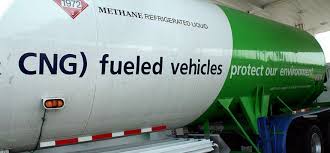
Strategic partnership has been identified as key to accelerating Nigeria’s Compressed Natural Gas (CNG) transition aimed at reducing dependence on fossil fuels, reduce transportation costs and improve climate resilience.
The National Compressed Natural Gas Forum (NCNG-F), realising this option has therefore reached out to transport unions, organised labour, private-sector organisations and financial institutions urging them to intensify efforts to accelerate the adoption of the clean fuel as an alternative petrol and diesel for transportation in Nigeria.
The forum said stronger collaboration among government agencies, industry operators, financial institutions and organised groups was essential to make CNG more accessible, affordable, safe and reliable for Nigerians.
The National Chairman of NCNG-F, Faruk Abdullahi, on Wednesday at the National CNG Adoption Conference and Strategic Stakeholders’ Meeting in Abuja, themed “Strengthening the National CNG Adoption and Mobilization Agenda”
said Nigeria needed to move beyond policy declarations and public awareness campaigns to practical measures that would encourage vehicle owners and commercial transport operators to embrace CNG.
“Our most important task is to turn stakeholder support into actual CNG adoption,” he said.
He noted that the removal of the fuel subsidy had increased transportation and production costs, placing considerable pressure on households, businesses and commercial transport operators.
According to him, CNG presents an opportunity to reduce operating costs, strengthen domestic energy utilisation, create jobs and attract investment across Nigeria’s gas value chain.
However, he stressed that the availability of natural gas alone would not guarantee widespread adoption without adequate infrastructure, affordable conversion options, reliable refuelling services, appropriate safety standards and public confidence.
“People will not convert their vehicles merely because the technology exists or because government has announced an initiative. Adoption will depend on whether the alternative is accessible, affordable, safe, reliable and economically beneficial to the people expected to use it,” Abdullahi said.
The NCNG-F chairman urged transport unions and professional associations to take an active role in encouraging their members to consider converting suitable vehicles to CNG.
He said transport unions could help identify eligible vehicles, connect members with credible conversion centres, negotiate group conversion arrangements and engage financial institutions to develop affordable financing options.
He also encouraged unions to organise demonstrations, awareness programmes and pilot projects that would enable commercial drivers and fleet operators to assess the potential savings under their actual operating conditions.
Abdullahi emphasised that the transition should not be imposed on transport operators without adequate information or consideration of their financial circumstances.
Instead, he said, stakeholders should provide the knowledge, financial support and infrastructure needed to help Nigerians make informed decisions about switching to CNG.
He similarly called on organised labour and workers’ associations to promote awareness among their members while ensuring that the transition addresses workers’ welfare, purchasing power and the rising cost of living.
Abdullahi identified the initial cost of vehicle conversion, limited access to refuelling stations, financing constraints, public awareness and safety concerns as some of the major barriers to wider CNG adoption.
He urged stakeholders to determine which challenges required government intervention, private investment or coordinated action among unions, gas suppliers, conversion centres and financial institutions.
He said potential users needed clear information about conversion costs, expected fuel savings, vehicle suitability, maintenance requirements and the availability of refuelling infrastructure.
“Our responsibility is to create the conditions in which adoption becomes a rational and achievable economic decision,” he said.
The forum also called on petroleum marketers, gas suppliers and conversion service providers to build public confidence through transparent pricing, quality installations, compliance with safety standards and reliable service delivery.
Financial institutions and investors were encouraged to explore opportunities in gas supply, refuelling infrastructure, vehicle conversion, fleet management, equipment and related services.
Abdullahi said affordable financing arrangements would be particularly important in enabling individuals, cooperatives, fleet owners, transport unions and businesses to overcome the high upfront costs associated with conversion.
At the conference transport unions, petroleum marketers and other industry players told the Federal Government that thin refuelling infrastructure, weak financing and a supply shortfall are the biggest obstacles to wider adoption of CNG in the country even as the Presidential Initiative on CNG (Pi-CNG) says it has set up more than 500 conversion centres nationwide.
Giving an update on progress, the Conversion Manager of Pi-CNG and EV, Adaugo Uzogara, said that since May 2023 the initiative had established over 500 conversion centres and more than 90 refuelling stations across 25 states.
She said the effort had created many direct and indirect jobs and expressed hope that continued collaboration would carry CNG to all 36 states, offering cleaner, cheaper and safer energy.
Representing the interests of petroleum product retailers, the President of PETROAN, Dr. Billy Gillis-Harry, also contributed to the discussions on the future of CNG and its place in Nigeria’s evolving energy market.
PETROAN’s participation highlights the importance of engaging existing petroleum retail operators in efforts to expand alternative fuel infrastructure, explore investment opportunities and ensure that the transition creates viable opportunities across the downstream petroleum sector.
During the open session, however, representatives of the participating groups painted a picture of serious gaps on the ground.
The group said the biggest challenge was a supply gap, citing figures from the upstream regulator, the Nigerian Upstream Petroleum Regulatory Commission (NUPRC), and noting that CNG stations are often crowded with vehicles.
They also noted that building a single CNG station could cost over N3 billion, and urged the government to provide incentives so that Nigerian investors would not take their capital to neighbouring countries.
The Petroleum Tanker Drivers (PTD) said fuelling points were too few, noting that only a handful operate around Lagos and that queues can reach 50 vehicles.
They said existing diesel engines in tanker trucks generally cannot be converted and that buying a CNG truck or engine could cost about N100 million, a sum most members cannot afford.
The transport body said the 90 refuelling stations and 500 conversion centres were far too few for the number of trucks on the road and called for new stations along coastal routes.
They also raised the need for technology transfer and local capacity to maintain converted vehicles, and asked what financing had been mobilised and at what interest rate.
They noted that many trucks imported with conversion kits had since gone out of service because of poor maintenance.
They spoke about the reality for long distance operators, saying that a trip from Lagos to Abuja offers only a few refuelling points, that drivers in Abuja can wait among 250 or more vehicles in a queue, and that some stations stand idle.
They also asked why transporters have no dedicated bank, unlike agriculture and industry, and said they are forced to borrow from commercial lenders at high cost.
The stakeholders praised the removal of the fuel subsidy as a bold step that opened the door to alternatives such as CNG, solar and electric power, however, they noted that infrastructure, financing and capacity building remain weak, and called on the conference to issue a strong statement on how to overcome them.
They said the sector must plan around guaranteed buyers for gas, since suppliers who sign agreements must be ready to take delivery or face heavy penalties.
According to them, storage facilities for gas are capital intensive, and that Pi-CNG had done well to start by building demand through conversion centres.
The stakeholders agreed that safety, infrastructure, financing, local capacity and reliable supply must be tackled together if CNG is to become a practical option for millions of Nigerian motorists and businesses.