




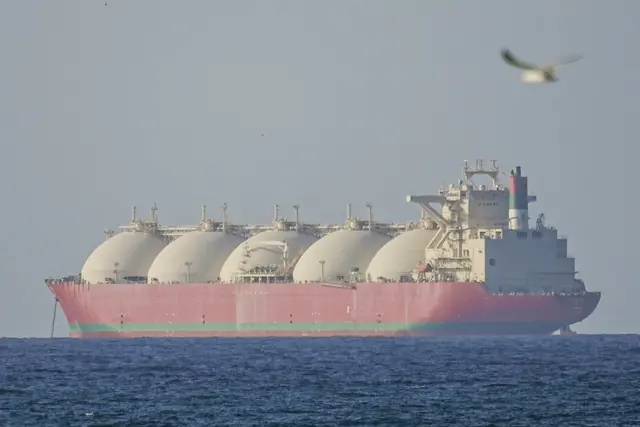
Global crude benchmarks fell sharply after US President Donald Trump announced that the United States is in the “final stages” of talks with Iran. The statement sparked market optimism for a near-term diplomatic breakthrough that could reopen the blockaded Strait of Hormuz and restore vital global energy flows.
Market Reaction: Crude Slump and Options Activity
The market responded aggressively to the diplomatic headlines, wiping out premium risks that had built up over nearly three months of conflict.
- West Texas Intermediate (WTI): Fell by 5.7%, settling at $98.26 a barrel in New York for July delivery.
- Brent Crude: Slipped 5.6% to close at $105.02 a barrel for July settlement.
- Options Shift: The call skew for both WTI and Brent—the premium traders pay to bet on rising prices—shrunk to its lowest level since the war began. Concurrently, a massive Brent put options block equivalent to 134 million barrels was traded, a bearish bet positioned to profit if prices tumble another 15%.
Geopolitical Friction vs. Market Optimism
Now in its 12th week, the conflict has choked traffic through the Strait of Hormuz—a bottleneck that handles a fifth of global oil supplies—fueling international inflation. Traders are actively pricing in an abrupt de-escalation that would unlock millions of barrels of crude currently stranded in the Persian Gulf.
However, analysts urge caution regarding the political rhetoric.
“One has to take these sorts of headlines with a pinch of salt,” said Fawad Razaqzada, market analyst for global macro at StoneX. “Trump has made so many claims of this nature during this conflict… Let’s see if this time it is different.”
Diplomatic Moving Parts
- The US Position: Trump stated that a deal would be made, but paired it with a warning that the US would do “things that are a little bit nasty” if terms are rejected, reiterating threats of renewed military strikes.
- The Iranian Response: Iran is currently reviewing a new US draft response to Tehran’s 14-point proposal. While state media reports that negotiations are ongoing, Tehran simultaneously warned it would retaliate beyond the Middle East if targeted by US or Israeli forces.
- International Pressure: In Beijing, Chinese President Xi Jinping met with Russian President Vladimir Putin, where both leaders renewed calls for a Middle East ceasefire to stabilize shifting geopolitical alignments.
Supply Metrics and Shipping Signals
While rhetoric dominated the session, tangible data points also suggested a slight easing of supply anxieties.
1. Strait of Hormuz Traffic
Some risk premium dissipated as ship-tracking data indicated a minor uptick in waterway traffic. Three oil supertankers were spotted attempting to cross the strait. While Iran claimed 26 ships transited within a 24-hour window, independent tracking suggests lower actual numbers.
2. Domestic US Inventories
The diplomatic news overshadowed standard weekly US inventory data, which showed a somewhat lackluster demand profile:
- Crude Stockpiles: Decreased by 7.9 million barrels, matching industry expectations.
- Gasoline & Exports: Domestic gasoline demand ticked up only slightly, while US exports fell short of recent records—indicating that international buyers may be slowing their panic-buying of American barrels.