

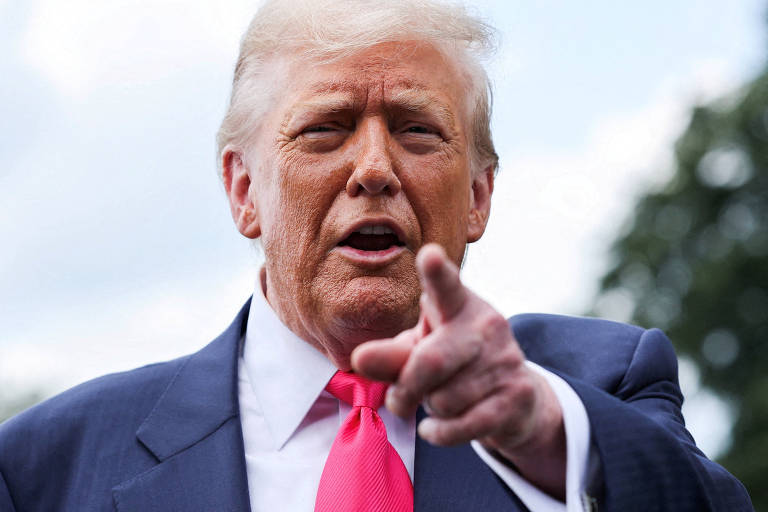
US President Donald Trump threatened Monday to destroy Iran’s crude export hub of Kharg Island, along with the country’s oil wells and power plants, unless Tehran quickly accepted a peace deal.
The risk of further escalation, including a potential US ground operation to seize Kharg Island, is sending tremors through financial markets, as well as neighbouring Gulf countries.
In a post on his Truth Social network, Trump expressed confidence that a negotiated settlement would soon be reached, adding that the United States was in “serious discussions” with “a more reasonable regime” in Tehran.
But he warned that if a deal was not struck – including to reopen the Strait of Hormuz shipping lane – US forces would destroy “all of their Electric Generating Plants, Oil Wells and Kharg Island (and possibly all desalination plants!).”
Destroying civilian infrastructure such as power and water facilities would be illegal under international humanitarian law and could constitute a war crime, experts say.
Iran has previously threatened to retaliate by targeting energy infrastructure and desalination plants in its Arab neighbours in the Gulf, who host US military bases, such as the United Arab Emirates, Oman, Qatar and Saudi Arabia.
Market experts warned that any US ground operation or wider Iranian retaliation could send oil prices to levels not seen since the July 2008 commodity boom, when the cost of world benchmark Brent crude hit close to $150 per barrel.
Brent has already risen in price by nearly 60 per cent this month, and the US benchmark WTI by more than half.
The spectre of a widening conflict grew over the weekend when Iran-backed Houthi rebels in Yemen fired missiles and drones at Israel.
The Houthis have previously threatened shipping through the Red Sea and Suez Canal, which requires vessels to travel through a narrow strait off Yemen’s coast.