

With the pump price of petrol nearing N1,500 per litre amid Middle East tensions, labour unions, economists, manufacturers, and civil society groups have called for urgent government palliatives to lessen the economic burden on families and businesses.
They are demanding fuel subsidies, naira-denominated crude to the Dangote Refinery and public refineries, strategic petroleum reserves, expanded public transport, renewable energy incentives, and power sector reforms to counter petrol prices nearing.
Advertisement
They say that the current pressures are fuelling inflation, business closures, job losses, and hardship for households and small and medium-size enterprises (SMEs).
This is as the minister of Information, Mohammed Idris, has stated that Nigeria is ready to boost global oil supply to support energy security.
He highlighted President Tinubu’s reforms, which aim to strengthen the economy and international relations, citing, for instance, the recent UK visit, and noted that African nations are increasingly turning to the Dangote Refinery as an alternative amid tensions with Iran.
Organised labour has called on the Federal Government to take urgent and strategic measures to cushion the impact of rising fuel prices as petrol edges closer to N1,500 per litre.
Speaking exclusively to LEADERSHIP, the Nigeria Labour Congress (NLC) acting General Secretary, Comrade Benson Upah, said the current volatility in the global oil market, largely driven by escalating Middle East tensions, has exposed Nigeria’s lack of preparedness to manage external shocks.
He observed that countries with foresight typically build strategic petroleum reserves to absorb sudden disruptions and stabilise domestic markets. According to him, Nigeria appears to lack such buffers, as evidenced by the immediate impact of the crisis on local pump prices.
Upah stressed that, while the government may be benefiting from increased crude oil revenues, these gains could be short-lived if urgent interventions are not implemented to protect citizens and the economy. He warned that soaring energy costs could trigger widespread inflation, disrupt businesses, and worsen socio-economic conditions across the country.
The labour leader outlined both immediate and long-term expectations from the government. In the short term, he urged authorities to ensure the supply of crude oil in naira to local refineries, particularly the Dangote Refinery, to boost domestic production and reduce reliance on imports. For the long term, Upah emphasised the need for the establishment of strategic reserves nationwide to mitigate future shocks.
He further cautioned that failure to act decisively could erode any economic gains and deepen hardship among Nigerians.
He said, “Geopolitical upheavals, especially of the magnitude in the Middle East, provoke shocks in the global oil market. These shocks are particularly fundamental given that the Middle East is home to some of the world’s largest oil and gas reserves, infrastructure, and transportation systems.
“In anticipation that conflicts are inevitable and could rapidly escalate, serious governments build strategic reserves using massive storage facilities. Strategic reserves are not permanent solutions; they are intended to minimise sudden shocks and give government time to respond more coherently.
“The impact on us was instantaneous, suggesting there were no reserves, and if there were, they were not released. Pump prices have almost doubled since then, with no end in sight to the raging war. In the short term, the government is advised to sell sufficient crude in naira to the Dangote Refinery and other functional refineries for local consumption. If non-oil-producing countries provide protection to their citizens in such precarious times, we expect our government to do more.”
Several groups have warned that the surge in petrol and diesel prices is exacerbating the cost-of-living crisis, increasing transportation costs, and placing significant pressure on households, workers, and businesses.
Following uncertainty over the duration of the war and its impact on global fuel prices, the leadership of the Nigeria Labour Congress has renewed its call for Nigeria to pursue self-sufficient refining through the revival of the nation’s refineries.
The labour union also warned against actions that could sabotage public refineries and create a monopoly in the downstream sector.
NLC President, Comrade Joe Ajaero, said the development should serve as a wake-up call for economic managers to pursue policies that guarantee economic independence for the country.
According to him, “No nation achieves economic freedom by exporting jobs and importing prices. The government must immediately halt the vandalism of the public sector and bring the Port Harcourt, Warri, and Kaduna refineries back on stream—not as a favour, but as a right of the Nigerian people to shield themselves from a hostile global order.”
Ajaero added that the current fuel situation is already taking a heavy toll on workers and their families.
“The cost of PMS and AGO has made transportation a noose around workers’ necks. Food inflation is galloping, and meagre wages are being swallowed by this induced scarcity. When a worker cannot afford to travel to work, the economy halts. When a family cannot afford three meals a day, society sits atop a keg of gunpowder.
“The government cannot foreclose any action that would offer succour. We demand immediate intervention. It is the duty of the state to act to prevent the agony of its citizens and not wring its hands in hopelessness while citing the Middle East war,” he said.
Speaking with LEADERSHIP, the President of the Nigeria Union of Petroleum and Natural Gas Workers (NUPENG), Comrade Williams Akporeha, urged the Federal Government to introduce temporary relief measures, including the reintroduction of a fuel subsidy as a bailout for Nigerians.
According to Akporeha, “This is the period when our government should offer hope to Nigerians, having gained significantly from subsidy removal in previous months, to shield citizens from the current oil price hike.”
Dr Muda Yusuf, Chief Executive Officer of the Centre for the Promotion of Private Enterprise (CPPE), called on the government to adopt immediate measures to prevent further economic hardship for citizens and businesses.
According to Yusuf, “The current surge in global energy prices, largely triggered by geopolitical tensions in the Middle East, once again highlights the vulnerability of businesses and economies to external shocks in global energy markets.
“For Nigerian businesses, resilience will depend on improving energy efficiency, diversifying energy sources, strengthening financial management, and enhancing logistics efficiency. For the government, the crisis underscores the urgency of accelerating reforms in electricity supply, renewable energy adoption, and domestic refining capacity.
“With the right combination of proactive business adaptation and supportive public policy, Nigeria can significantly mitigate the impact of the current energy price shock and strengthen the resilience and competitiveness of its business environment.”
For its part, the Federation of Informal Workers of Nigeria (FIWON) has called for government action to prevent further suffering for Nigerians, particularly those in the informal sector. Speaking to LEADERSHIP, FIWON General Secretary, Comrade Gbenga Komolafe, stressed the urgency of stabilising domestic fuel prices.
“Although Dangote Refinery, the only functional refinery in Nigeria, at the pre-February 28 crude price, ensuring stable domestic prices of petroleum products is imperative. This has become all the more necessary to stabilise an economy still reeling from the effects of President Tinubu’s radical neoliberal reforms, instituted since 2023—a situation that has led to serious existential suffering for most Nigerians, especially those in the informal economy, who lack even the most elementary social safety nets,” Komolafe said.
“Interestingly, Iran, the country at the centre of the theatre of war, bearing the burden of massive destruction of its infrastructure, is still subsidising domestic fuel prices for its citizens!”
Yusuf highlighted the wider economic impact of rising global oil prices. Brent crude has surged above $100 per barrel amid Middle East tensions and disruptions around the Strait of Hormuz, a critical global energy corridor.
“Higher fuel and logistics costs are imposing heavy welfare burdens on citizens, especially vulnerable groups, while micro, small and medium enterprises are grappling with rising operating costs, weaker sales and increasing uncertainty,” he said.
Yusuf also stressed Nigeria’s structural energy challenges, noting that poor electricity supply forces households and businesses to rely heavily on generators, costing the economy between N7 trillion and N10 trillion annually, while Nigerians spend about N3.7 trillion each year on generators.
He urged government to improve crude oil supply to domestic refineries, expand affordable public transport, and remove fiscal barriers on renewable energy equipment such as solar panels and batteries.
“This will reduce dependence on petrol and diesel generators and strengthen resilience in the face of rising fossil fuel costs,” Yusuf said, adding that improving electricity supply remains the most sustainable solution.
The chief executive of CFG Advisory, Tilewa Adebajo, warned that businesses must not exploit rising prices. “There will be a social impact, but as people start increasing prices for transport and other goods, the government needs to ensure that price increases are proportionate,” he said, noting that petrol prices have surged nearly 59 per cent since February, rising from N900 to between N1,275 and N1,400 per litre.
Similarly, the director-general of the Nigerian Textile Manufacturers Association (NTMA), Hamma Kwajaffa, highlighted the global context.
“This increase is universal, and we are witnessing a general rise in prices across the globe, which complicates matters for a government struggling to balance its own budget,” he said, adding that subsidy removal has left government with limited options to cushion the financial burden.
Kwajaffa warned that inflation could rise further unless the government intervenes: “The situation is critical, and the government is already in a difficult position with many financial obligations on its plate.”
The national president of the Association of Small Business Owners of Nigeria (ASBON), Dr. Femi Egbesola, described the impact on SMEs as severe. He noted that high fuel costs have increased operational expenses, squeezed profit margins, dampened consumer demand, and forced some businesses to reduce output or close.
“Small businesses have suffered additional shocks and multiple headwinds, with significant losses and setbacks due to the fuel price increase as a result of subsidy removal. Many are no longer running profitably, with sales dropping sharply, cash availability falling, and some businesses becoming moribund or closing entirely. It is indeed a sorry case,” Egbesola said.
He called for targeted support for productive sectors, efficient local refining, and policy stability in exchange rates and energy pricing. “Higher fuel prices drive up operating costs—transportation, power, and raw materials—while weakening consumer purchasing power. Businesses must become more efficient, manage cash flow tightly, and focus on essential, value-driven offerings to survive this economic strain,” he added.
Government Readiness and International Cooperation
Mohammed Idris, Minister of Information, said Nigeria is ready to support global energy stability amid Middle East tensions. “With the world in need of oil, Nigeria is available to help. Whatever Nigeria can do to ease tension, it will do. The world needs oil, and Nigeria is there,” he said.
Idris also highlighted President Bola Tinubu’s engagements abroad, emphasising their importance in strengthening relations with the United Kingdom. “This visit underscores the historical, cultural, and economic ties between Nigeria and the UK. We hope to deepen it further in the interest of both countries,” he said, noting that ongoing reforms have already improved Nigeria’s global standing.
Some African countries, previously reliant on Persian Gulf refineries, are reportedly now looking to Dangote Refinery as an alternative source.
Transport Sector Calls for Energy Diversification
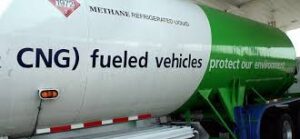
Transport groups are pressing for broader energy policies to accelerate the shift from petrol to a diversified mix of compressed natural gas (CNG), liquefied petroleum gas (LPG), and renewables.
Yusuf Lawal Othman, National Chairman of the National Association of Road Transport Owners (NARTO), said government support is needed to convert vehicles to CNG, which is cheaper and more sustainable. Over 15,000 vehicles have already been converted, offering significant savings.
The Petroleum Products Retail Outlets Owners Association of Nigeria (PETROAN) echoed calls for gasification projects, emphasising the need for 1 million CNG conversion kits and strategically located CNG stations. PETROAN President, Dr. Billy Gillis-Harry, also proposed a dedicated Energy Bank of Nigeria with $15 billion in funding to support local refining projects, modular refineries, and independent marketers, strengthening national energy security.
Dr. Silk Ugwu Ogbu, Associate Professor at Lagos Business School, Pan-Atlantic University, advised opening strategic reserves to guarantee crude supply to domestic refineries like Dangote, while strengthening petrol sector governance and the forex market to stabilise fuel prices.
Meka Olowola, Chairman of Zenera Group, stressed the need for a disciplined, long-term approach. “Government should scale up LPG adoption for households and small businesses, including digital subscription models that remove upfront cylinder costs, while easing pressure on petrol demand and improving affordability,” he said.